
Why Coatings Fail: It Is Almost Always Prep — The Short Answer
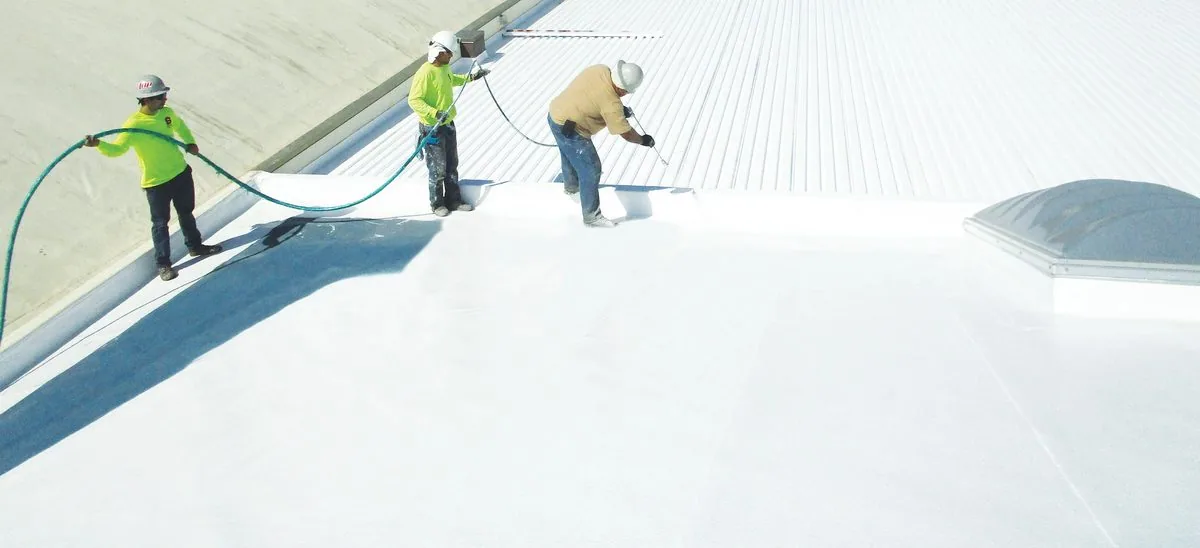
What goes wrong first on a roof coating in Sherman Oaks, and the signs that show up years ahead.
Understanding why something fails is more useful than a list of symptoms, because the same symptom has several causes and they need different work. Here is what actually goes wrong with a roof coating in Sherman Oaks, and what it looks like from the ground before it becomes a ceiling stain.
What actually goes wrong
Coatings fail at the prep stage almost every time. The material is rarely the problem. Dirt, chalk, oils and residual moisture stop adhesion, and a coating that cannot bond will peel in sheets within a couple of seasons no matter what it cost.
Why it happens when it does
The cause and the symptom are rarely in the same place. Water tracks, so an entry point and a ceiling stain can be several feet apart. Wet film thickness is the number that matters. It is measured during application with a simple gauge, and it is the only way to know the roof is getting the millage that was quoted rather than a thinner coat spread further. Catching it at that stage is the difference between a repair and a replacement.
How Sherman Oaks makes it worse
The Verdugo Hills are about as demanding a setting as a roof faces in this area: hillside exposure, wind funnelling through the canyons, high ultraviolet on the open slopes, and fire risk on every property that backs onto brush. The specification has to account for all of it at once. Building up here is largely custom, on steep lots, with complicated roof geometry, long exposed runs and difficult access.
What we look at on an inspection
- Substrate moisture, established before anything is quoted
- Adhesion, confirmed by test patch rather than assumed
- Surface contamination, chalking and existing coating compatibility
- Seam and penetration reinforcement requirements across the roof
- Ponding areas, which need drainage correction before coating
- Wet film thickness recorded during application
- Manufacturer specification for the substrate actually present
Common questions
Can this be repaired or does it need replacing?
It depends whether the cause is localised or systemic. A failed penetration is a repair; a covering that has gone brittle across the whole roof is not.
How urgent is it?
Anything open before the rains is urgent. Anything cosmetic can wait for a dry-season schedule, which is also when it is cheaper.
The honest summary
A coating over a sound, dry, properly prepared roof is one of the best-value things available. Over wet insulation it is money spent trapping the problem where nobody can see it. In Sherman Oaks the thing to watch is uplift at the exposed edges, valley and ridge detailing, and the fire detailing where a property backs onto open ground.
Free inspection, drone photography where access is difficult, and a written estimate with deck repair priced per sheet. No obligation.