
Coating Over Wet Insulation: Do Not — Homeowner Checklist
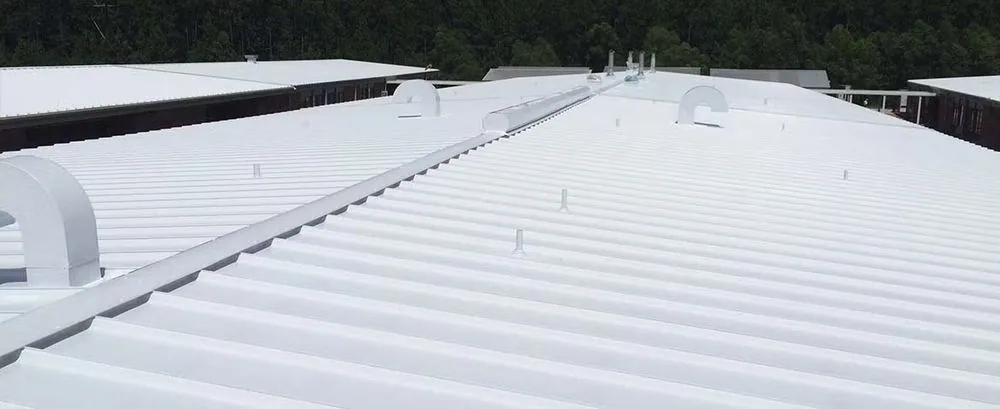
The short list that adds years to a roof coating in Sherman Oaks, and the jobs that are pure theatre.
Knowing what to look at turns a vague worry into either a short list or an early night. Most of this can be done from the ground with binoculars and from inside the attic with a torch — no ladder, no risk, and it tells you whether to call anyone.
What actually matters
A coating can add years to a sound roof for a fraction of a tear-off, and it puts nothing into landfill. That is its commercial argument and it is a good one. The word doing the work in that sentence is sound: a coating is a waterproofing layer over an existing roof, not a repair for one that has already failed.
What you can check yourself
Silicone and acrylic behave differently and the choice is not a matter of preference. Silicone tolerates standing water and holds up where drainage is imperfect, which describes most older flat roofs in this city. Acrylic is cheaper, breathes better and recoats more easily, but it will not survive ponding. Wet-film thickness is the number that decides service life, and it is the number most commonly cut to win a bid — twenty wet mils and thirty wet mils look identical on the day and differ by years.
What is specific to Los Angeles
Our rain arrives in a few concentrated storms onto roofs whose drains have been dry since April, so ponding is common in the first storm even on roofs that drain adequately for the rest of the year. That single fact settles the silicone question for most Los Angeles flat roofs.
The full inspection list
- Substrate moisture readings before anything at all is specified
- Existing membrane adhesion and seam condition
- Ponding areas and whether drainage can be improved first
- Penetration and parapet detailing, which is where coatings fail
- Compatibility with whatever is already up there
- Surface contamination, grease and silicone residue near extract points
Common questions
How often should I check?
Twice a year — before the rains and after the first real storm — plus once after any significant wind event.
Do I need to get on the roof?
No, and preferably not. Binoculars from the ground and a torch in the attic find most of it, and walking a roof causes damage of its own, particularly on tile.
The honest summary
The coating failures called out to are almost always preparation failures: applied over a dirty or damp substrate, or over wet insulation that should have triggered a replacement instead. A coating cannot fix a wet roof, and applying one seals the moisture in.
Free inspection, drone photography where access is difficult, and a written estimate with deck repair priced per sheet. No obligation.