
Weld Testing: How TPO Seams Are Checked — What to Expect
What moves the number on a TPO roof in Sherman Oaks, and what a quote should already include.
Knowing what to look at turns a vague worry into either a short list or an early night. Most of this can be done from the ground with binoculars and from inside the attic with a torch — no ladder, no risk, and it tells you whether to call anyone.
What actually matters
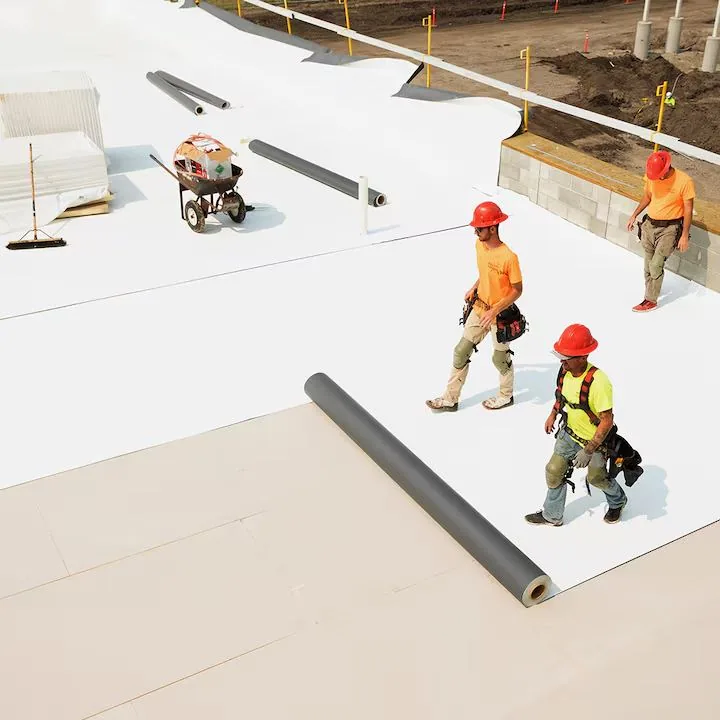
White single-ply membrane covers most of the commercial stock in this city, and for good reason: it is the most effective cool roof widely available, and on a large warehouse the cooling saving alone can justify the specification. Reflectivity does fall as the surface weathers and collects the grit that hangs in the basin air, but even a dirty white roof runs far cooler than a dark one.
What you can check yourself
Thickness is the specification decision that matters. Sixty mil is the sensible minimum for any roof with service traffic; eighty is worth the difference where there is substantial rooftop plant. The seams are heat welded, and a weld is either sound along its whole length or it is not — which is why a proper inspection probes them rather than looking at them. Mechanically fastened systems go down faster and cost less; fully adhered systems perform better under wind uplift at the perimeter.
What is specific to Los Angeles
Almost every commercial building here carries rooftop HVAC, and the majority of TPO failures attended were caused by another trade rather than by weather. A technician dragging a condenser across an eighty mil membrane will open it, and nobody reports it. Walkway pads to every unit pay for themselves the first time they prevent a puncture over an occupied space.
The full inspection list
- Weld integrity at every lap, probe-tested along the full length
- Punctures and abrasion around HVAC and service routes
- Boot and flashing condition at penetrations
- Ponding persisting beyond forty-eight hours
- Drain clearance and sump condition
- Perimeter termination and edge metal
- Insulation moisture, particularly under any previous patch
Common questions
How often should I check?
Twice a year — before the rains and after the first real storm — plus once after any significant wind event.
Do I need to get on the roof?
No, and preferably not. Binoculars from the ground and a torch in the attic find most of it, and walking a roof causes damage of its own, particularly on tile.
The honest summary
Laying new membrane over wet insulation guarantees failure and is the most expensive mistake available on a commercial roof. Moisture readings come first; if the insulation is saturated, that is a replacement rather than an overlay, and any contractor who says otherwise is selling the cheaper job.
Free inspection, drone photography where access is difficult, and a written estimate with deck repair priced per sheet. No obligation.