
Reflectivity and Sherman Oaks Cooling Bills — Before You Commit
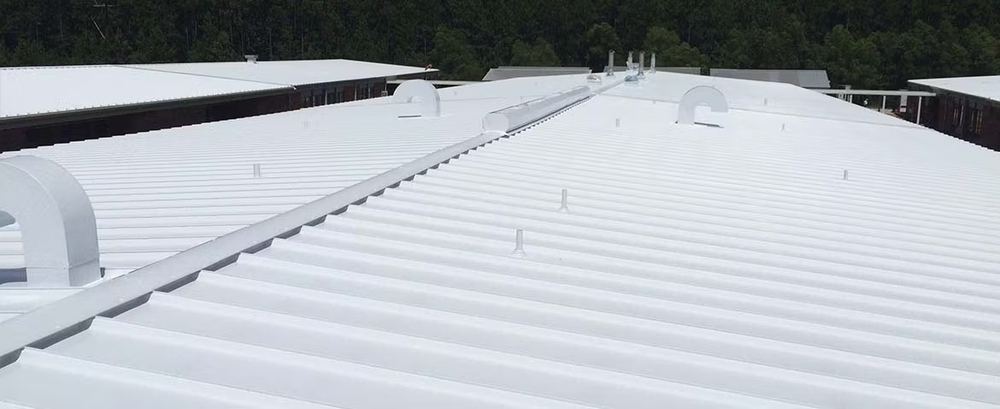
What has to be documented on a roof coating in Sherman Oaks before you call a carrier, and in what order.
An insurance claim on a roof coating is won or lost on documentation, not on argument. In Sherman Oaks, this is what needs to exist before anybody calls a carrier.
What actually matters
A coating is a renewal of a roof that still works, not a repair of one that does not. Applied to the right substrate it can add years for a fraction of a tear-off; applied to the wrong one it seals a problem inside. For a claim that means the damage has to be described in terms of the system, not the surface.
Where claims go wrong
Claims are lost on scope far more often than on liability. Every affected element needs identifying at the start, because adding it later means a supplement and fresh evidence. Wet film thickness is the number that matters. It is measured during application with a simple gauge, and it is the only way to know the roof is getting the millage that was quoted rather than a thinner coat spread further. Almost every difficult claim we see went wrong in the first week.
What is specific to Sherman Oaks
Summer is the problem here. Sherman Oaks sits inland at the foot of the mountains with nothing to moderate it, so a roof surface that reads ninety degrees at the coast is well past a hundred and fifty on Foothill by mid-afternoon, and it holds that heat for weeks. Everything on the roof expands into it and contracts again overnight, and that daily movement, not the peak temperature, is what opens laps and backs fasteners out. Much of Sherman Oaks went up between the 1950s and the 1970s, which usually means original decking, ventilation that was never sized for this much heat, and often a layer somebody roofed straight over rather than tearing off.
What we look at on an inspection
- Substrate moisture, established before anything is quoted
- Adhesion, confirmed by test patch rather than assumed
- Surface contamination, chalking and existing coating compatibility
- Seam and penetration reinforcement requirements across the roof
- Ponding areas, which need drainage correction before coating
- Wet film thickness recorded during application
- Manufacturer specification for the substrate actually present
Common questions
Why do claims get denied?
Most often because the damage cannot be tied to a dated event, so it reads as wear and tear. Wear and tear is not covered by any policy.
Should I get my own assessment as well?
It helps. An itemised independent scope gives you something concrete to discuss if the initial approval misses elements.
The honest summary
A coating over a sound, dry, properly prepared roof is one of the best-value things available. Over wet insulation it is money spent trapping the problem where nobody can see it. In Sherman Oaks the thing to watch is attic temperature and intake ventilation, because a Sherman Oaks attic that cannot breathe cooks the underside of the roof as hard as the sun cooks the top.
Free inspection, drone photography where access is difficult, and a written estimate with deck repair priced per sheet. No obligation.
More on Roof Coating
- Reflectivity and Sherman Oaks Cooling Bills — Myths and FactsRoof Coating
- Reflectivity and Sherman Oaks Village Cooling Bills — Costs and TimelinesRoof Coating
- Reflectivity and Southern California Cooling Bills — Myths and FactsRoof Coating
- Recoat Cycles and Real Service Life — Inspection NotesRoof Coating