
Rust and Corrosion on Metal Roofs in Sherman Oaks — Materials Compared
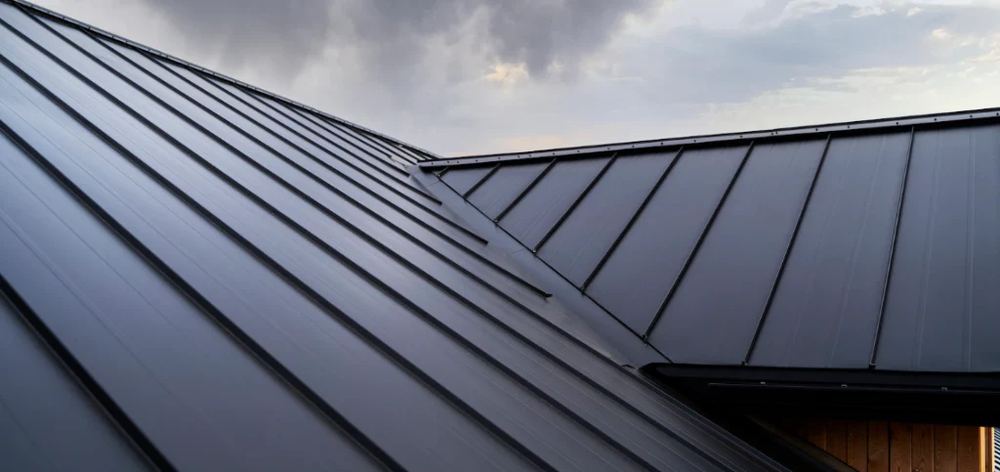
How a metal roof compares in Sherman Oaks once service life is counted, rather than on day one.
This comes down to a choice between two things that look similar on a quote and behave very differently on a roof. The difference rarely shows on the day the work is finished; it shows around year eight, which is why it is worth understanding before signing rather than after.
What actually matters
A metal roof is a system rather than a covering. The panels themselves outlast everything around them; what decides how the roof ages is the gauge of the steel, the coating on it, and the way it is fixed down. Twenty-four gauge with a Kynar finish behaves very differently over twenty years to twenty-nine gauge with a polyester one, and the difference is invisible on the day it goes on.
The difference that shows up later
The fixing system matters more than most homeowners are told. An exposed-fastener panel is screwed through the face, and every one of those screws carries a rubber washer that hardens and shrinks in Los Angeles sun. After fifteen summers they back out, and a roof with two thousand fasteners has two thousand small opportunities to leak. A standing seam panel is held by concealed clips that let the metal expand and contract without loosening anything. It costs more and it is the reason standing seam roofs are still watertight when exposed-fix roofs are being re-screwed.
How Sherman Oaks settles it
Where the house sits changes the specification. On the exposed canyon lots, wind-driven grit works at cut edges and any fastener that is not properly sealed, and a roof specified for Sherman Oaks will show rust streaks at the eaves within a decade. Inland, the problem is heat rather than salt: a long panel in Sherman Oaks grows and shrinks measurably between a July afternoon and the following dawn, which is exactly the movement clips are designed to absorb and face-fixing is not. In the hillside fire zones metal is often specified for a third reason entirely — it will not ignite from ember fall, which matters more each year.
What we look at on an inspection
- Fastener condition on any exposed-fix section, and whether washers have hardened
- Clip engagement and any sign of thermal binding along standing seams
- Seam integrity down the full run, not only at the ends
- Sealant at penetrations, end laps and transitions
- Cut edges and coating damage, particularly on the exposed slopes
- Ridge, hip and valley flashing, where fabrication quality shows
Common questions
Which is better?
Neither, in the abstract. One suits roofs that drain imperfectly and one does not, and which roof you have decides it.
Can I change my mind later?
Partly. Some systems can be recoated or overlaid; others commit you to a tear-off next time. Worth asking before rather than after.
The honest summary
Metal is the highest up-front cost of the pitched options and the lowest cost per year of service. The figure moves most with complexity rather than size: a simple gable is straightforward, while a roof with many hips, valleys and penetrations costs disproportionately more, because the money is in flashing fabrication rather than in the field of the roof.
Free inspection, drone photography where access is difficult, and a written estimate with deck repair priced per sheet. No obligation.