
Parapet Detailing That Actually Holds — Questions to Ask
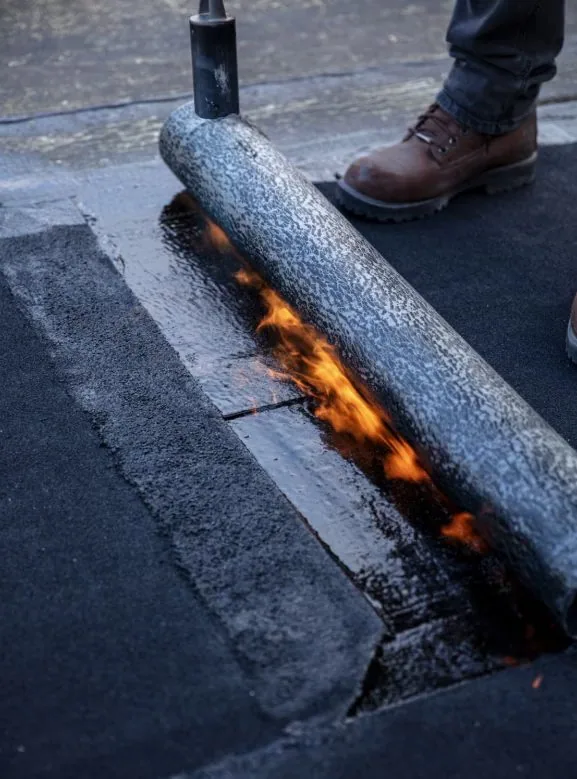
The short list that adds years to a flat roof in Sherman Oaks, and the jobs that are pure theatre.
Roof maintenance in Sherman Oaks is not complicated, but it is specific, and the parts people skip are the parts that matter. This is what is worth doing on a flat roof, and what is safe to leave alone.
What actually matters
Flat roofs are not flat. They are built with fall, and the fall is what keeps them alive. Every other detail is secondary to whether water leaves the roof. Maintenance on it is therefore about the parts that move, drain or seal, not the parts that merely look worn.
The detail that is usually left out
Timing matters more than frequency. One visit in late autumn, before the first rain, catches the things that actually matter. Drainage does not fail in the storm; it fails in the eight dry months beforehand. A drain that has been dry since April collects grit, leaves and debris, and nobody looks at it until water is coming through a ceiling. None of it is complicated, and all of it is cheaper than the call it prevents.
What is specific to Sherman Oaks
Sherman Oaks takes the full inland summer with very little relief after dark, and the ultraviolet load on a south-facing slope here is as hard as anywhere in the county. Asphalt ages from the top down under it: once the granules have gone the mat underneath turns brittle and starts to crack. Mostly single-storey post-war housing with later additions, which puts a transition detail in the middle of the roof where two eras of workmanship meet.
The full inspection list
- Fall across the roof, and any area holding water beyond forty-eight hours
- Drain and scupper clearance, including underneath every strainer
- Membrane condition across the whole field, not only at the edges
- Flashing at every penetration, curb and item of rooftop plant
- Parapet termination and counterflashing along the full perimeter
- Insulation moisture, established by probe rather than by eye
- Evidence and quality of previous patching
Common questions
How often should this be looked at?
Twice a year is ideal, and once is enough if you pick the right time: late autumn, before the first rain, catches the things that matter.
Can I do any of it myself?
The ground-level checks, yes. Anything that requires being on the roof is worth handing over, both for your safety and because damage caused by walking on a roof is a common and avoidable expense.
The honest summary
Ponding, blocked drainage and failed penetration detail account for nearly every flat roof call we take. If a quote does not mention drainage, it is a quote to recreate the same problem in a new material. In Sherman Oaks the thing to watch is granule loss on the sun-facing slopes, and the junction where an addition meets the original roof.
Free inspection, drone photography where access is difficult, and a written estimate with deck repair priced per sheet. No obligation.