
Debris Impact Damage Explained — Homeowner Checklist
The short list that adds years to storm damage in Sherman Oaks, and the jobs that are pure theatre.
Roof maintenance in Sherman Oaks is not complicated, but it is specific, and the parts people skip are the parts that matter. This is what is worth doing on storm damage, and what is safe to leave alone.
What actually matters
Storm damage is a moment in time, and documenting it properly matters as much as repairing it. What is recorded in the first forty-eight hours decides how the rest of the process goes. Maintenance on it is therefore about the parts that move, drain or seal, not the parts that merely look worn.
The detail that is usually left out
Timing matters more than frequency. One visit in late autumn, before the first rain, catches the things that actually matter. Temporary protection has to be done in a way that does not cause its own damage. A tarp fixed through a sound part of the covering creates new holes in a roof that did not have them. None of it is complicated, and all of it is cheaper than the call it prevents.
What is specific to Sherman Oaks
Summer is the problem here. Sherman Oaks sits inland at the foot of the mountains with nothing to moderate it, so a roof surface that reads ninety degrees at the coast is well past a hundred and fifty on Foothill by mid-afternoon, and it holds that heat for weeks. Everything on the roof expands into it and contracts again overnight, and that daily movement, not the peak temperature, is what opens laps and backs fasteners out. Much of Sherman Oaks went up between the 1950s and the 1970s, which usually means original decking, ventilation that was never sized for this much heat, and often a layer somebody roofed straight over rather than tearing off.
The full inspection list
- Displaced, lifted or missing units, slope by slope
- Seal integrity on the windward elevation, checked by hand
- Ridge, hip and perimeter fixing after wind loading
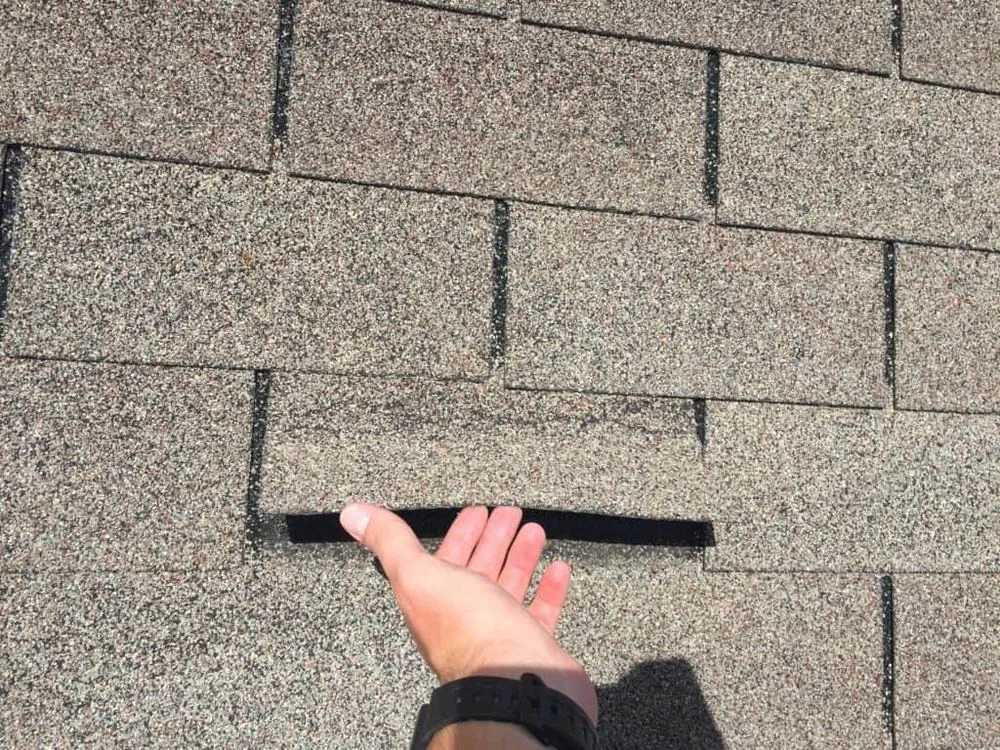
- Impact marks, splits and any debris strike on the surface
- Flashing displacement at walls, chimneys and penetrations
- Gutters and downpipes for detachment and blockage
- Interior and attic inspection for water entry already in progress
Common questions
How often should this be looked at?
Twice a year is ideal, and once is enough if you pick the right time: late autumn, before the first rain, catches the things that matter.
Can I do any of it myself?
The ground-level checks, yes. Anything that requires being on the roof is worth handing over, both for your safety and because damage caused by walking on a roof is a common and avoidable expense.
The honest summary
Get it documented, get it protected without adding damage, then get it assessed properly. Those three things in that order account for most good storm outcomes. In Sherman Oaks the thing to watch is attic temperature and intake ventilation, because a Sherman Oaks attic that cannot breathe cooks the underside of the roof as hard as the sun cooks the top.
Free inspection, drone photography where access is difficult, and a written estimate with deck repair priced per sheet. No obligation.